When you’re running a catering event or working out of a mobile kitchen setup, your cart is basically a second set of hands. Choosing the wrong one means dropped chafing dishes, a cart that won’t fit in your van, or a frame that buckles halfway through load-in. The short answer: prioritize weight capacity relative to your heaviest load, a folded size that actually fits your storage space and vehicle, stable locking wheels, and enough tiers to keep hot equipment separated from linens and supplies. Everything else — color, brand, price — is secondary to those four things.
Start With What You’re Actually Hauling
Before comparing carts, add up your real load. A single full chafing dish with water pan can weigh 15-25 lbs empty, more once filled with hot food. Add serving trays, a coffee urn, linens, and a tackle box of utensils, and you’re often pushing 150-250 lbs per trip. Caterers doing multi-course events or hauling entire mise en place setups can exceed 300 lbs without realizing it, because it’s not one heavy item — it’s a dozen medium ones stacked at once.
This matters because a lot of “utility carts” sold online are rated for garage or light warehouse use, not commercial food service. A cart rated for 150 lbs might handle a stack of folding chairs fine but sag or flex under stacked steam pans and water. When you’re shopping, look for a stated capacity with real margin above your typical load — not just enough to barely cover it. A cart rated at 350 lbs gives you room for a fully loaded event run without babying it or making two trips.
Fold Size Matters More Than Most People Expect
Capacity gets all the attention, but fold size is often the deciding factor for catering work specifically. Most caterers are working with one or more of these constraints: a cargo van with a fixed amount of floor space, a commercial kitchen with almost no extra storage, or a home-based operation where the cart has to disappear into a closet between gigs.
A cart that folds flat or collapses down significantly smaller than its open footprint changes how you plan your loadout. Instead of dedicating a permanent slot in the van to a bulky, unfoldable frame, you can stack a collapsed cart against a wall, slide it behind the last tray of supplies, or store two carts where one used to fit. If you’re comparing specs, look specifically at the folded dimensions and the percentage size reduction, not just “folds flat” — some carts fold in one direction but stay just as wide.
Tiers and Shelf Layout for Food Service Work
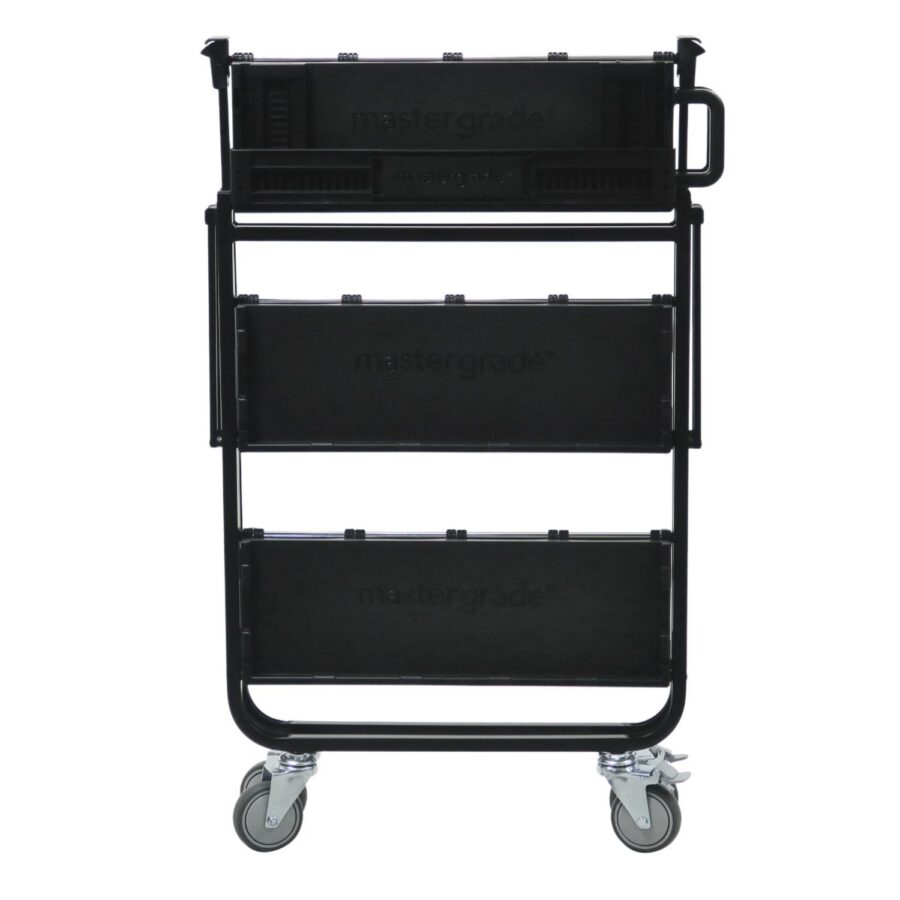
Most catering work benefits from a 3-tier layout rather than a single flat platform or a 2-shelf hand truck style cart. The reason is separation: you want hot equipment on one level, cold or delicate items on another, and small tools or linens on a third so nothing gets crushed or contaminated in transit.
A typical setup looks like:
- Top tier: frequently accessed items — utensils, chafer fuel, small tools you need during setup
- Middle tier: chafing dishes, serving trays, or insulated carriers
- Bottom tier: heavier, stable items like water containers, bins, or backup supplies
Flat, open tiers (rather than deep bins) are generally more useful for catering because trays and chafers are wide and shallow, not tall. A cart with guard rails or lipped edges on each tier helps prevent sliding during transport over curbs, ramps, or uneven parking lots.
Wheels and Stability on Real-World Surfaces
Catering carts rarely stay on smooth kitchen tile the whole trip. They go over gravel lots, loading dock lips, grass at outdoor weddings, and cracked sidewalks. Wheel quality determines whether that’s a smooth roll or a fight to keep everything upright.
Look for:
- Swivel front casters for maneuvering through doorways and tight kitchen aisles
- Locking wheels so the cart doesn’t roll away while you’re loading or unloading on a slope
- Wheel size — larger diameter wheels handle cracks, thresholds, and outdoor terrain better than small, hard casters
A cart can have a great weight rating and still feel unstable if the wheelbase is narrow or the casters are undersized for the frame. When possible, check the wheel diameter and material, not just the overall capacity number.
The Cart’s Own Weight Is a Hidden Factor
It’s easy to focus entirely on how much a cart can carry and forget how much the cart itself weighs. If you’re lifting it into a van, up a curb, or over a step at a venue with no ramp, a heavy frame becomes its own obstacle — especially if you’re working solo or doing load-in without help.
A lighter frame (aluminum or similar) that still holds a high capacity rating is generally the better trade-off for mobile chef and catering work, where you’re loading and unloading multiple times per event and often without a second set of hands.
Where FoldPro Fits Into This
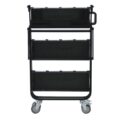
FoldPro, from Master Grade, is built around exactly these priorities for catering and mobile chef work: a 3-tier layout for separating hot equipment, linens, and tools; a stated capacity of 350 lbs to cover a fully loaded event run; a frame that weighs 25 lbs so it’s manageable to lift solo; and a fold-down design that collapses to roughly 70% smaller than its open size for van and closet storage. It’s currently in Kickstarter pre-launch, so it’s worth following if you’re evaluating options for an upcoming season rather than needing a cart in hand today.
Quick Checklist Before You Buy
- Does the stated weight capacity comfortably exceed your heaviest realistic load, not just match it?
- Does the folded size actually fit your van, storage closet, or kitchen space — check the numbers, not just “folds flat”?
- Are there at least 2-3 tiers to separate hot, cold, and small items?
- Do the wheels lock, swivel, and handle outdoor or uneven surfaces?
- Can you lift and carry the cart yourself when it’s empty and folded?
Getting these five answers right will tell you more than any spec sheet marketing copy — and it’ll save you from a cart that looks great online but fails on your third event.
Frequently Asked Questions
How much weight capacity do I actually need for catering equipment?
Most caterers should look for at least 250-350 lbs of rated capacity, since a full load of chafing dishes, trays, and supplies adds up quickly even when no single item is very heavy. Rating your cart above your typical load, rather than exactly at it, gives you a safety margin for wet or hot items.
Is a 3-tier cart better than a 2-tier cart for catering work?
For most catering setups, yes, because a third tier lets you separate hot equipment, delicate trays, and small tools instead of stacking them together. Two-tier carts can work for simpler loadouts, but three tiers reduce the risk of items sliding or crushing each other in transit.
Why does folded size matter if the cart already holds enough weight?
Weight capacity only solves the hauling problem, not the storage problem. If a cart doesn’t fold down small enough to fit your van, kitchen closet, or storage area, it becomes a daily hassle even if it carries plenty of weight.
What wheel type is best for outdoor catering events?
Larger-diameter swivel casters on the front paired with locking rear wheels are generally the best combination for outdoor events. They handle uneven grass, gravel, and curb transitions better than small hard casters, and locking wheels keep the cart in place on slopes.
Can one person load and unload a catering cart without help?
Yes, if the cart itself is lightweight relative to its capacity, which is why the cart’s own weight matters as much as what it can carry. A frame in the 20-30 lb range is generally manageable to lift into a van or over a curb without assistance.